For business
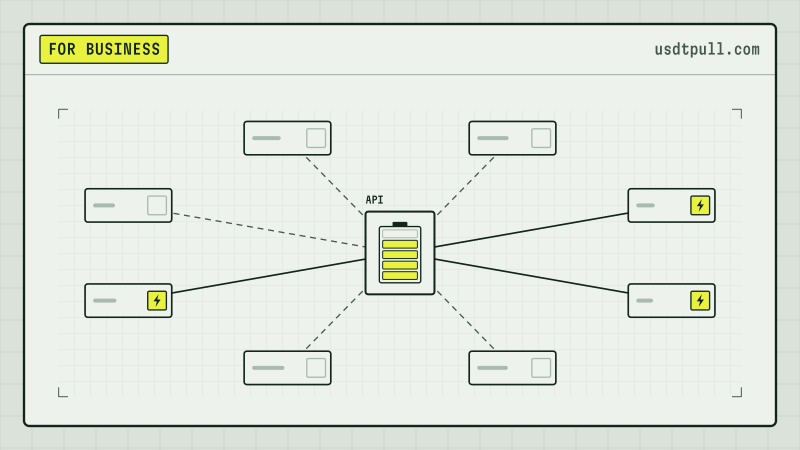
TRON Energy for OTC Desks: Large, Irregular USDT TRC-20 Transfers
A 30M USDT transfer and a 1 USDT transfer both used 64,285 energy on Nov 20, 2026. How an OTC desk with uneven deal flow pays for energy.
8 min read
Wallet guides, error breakdowns and calculations: what a USDT TRC-20 transfer costs and how to send it without burning TRX.
A 30M USDT transfer and a 1 USDT transfer both used 64,285 energy on Nov 20, 2026. How an OTC desk with uneven deal flow pays for energy.
8 min read
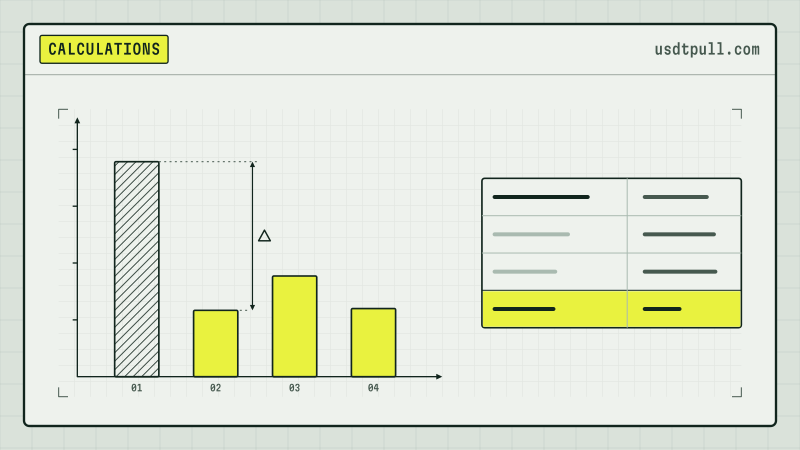
Five real TRON contract deployments from Nov 19-20, 2026: energy per byte of code, bandwidth, TRX burned, a free estimate, and burning vs renting energy.
8 min read
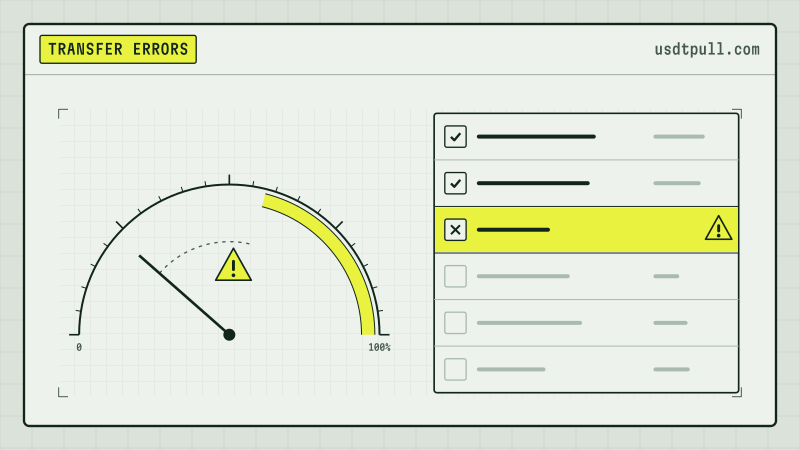
REVERT, OUT_OF_ENERGY, OUT_OF_TIME and 13 more TRON result codes: what each means, what it burns and what to do, checked on 568 USDT calls on Nov 20, 2026.
8 min read
Four ways a system learns about incoming USDT on TRON, one real transfer timed from block to confirmation, and three traps that credit money you never got.
A shared seed phrase opens a TRON wallet with USDT, but another key controls it. How the trap works, how to check any address, and why TRX won't help.
The same USDT TRC-20 transfer burned 0 to 13.36 TRX on Nov 15, 2026. The inputs behind a wallet's fee estimate and how to recompute it yourself.
Accepting USDT TRC-20 costs you nothing per incoming payment, but your address scheme decides what customers pay and what moving the money out costs.
Revoke a USDT TRC-20 approval with approve(spender, 0): how to check allowances for free, what a revoke cost on Nov 20, 2026, and fake revoke sites to avoid.
How TRON splits energy between a contract's deployer and its caller, real contract settings as of Nov 20, 2026, and a month of energy for a USDT bot.
Yes: Tether can blacklist a TRON address so its USDT cannot leave. Contract code, 315 listings in 30 days and a free status check, read on chain Nov 15, 2026.
TRON in October 2026, checked on Nov 15: burn prices unchanged, the staking pool swung 4%, java-tron 4.8.2.4, proposal #108 approved, USDT supply and activity.
Real TronGrid calls from Nov 2, 2026: how to estimate USDT transfer energy with triggerconstantcontract, why estimateenergy failed, and how to set fee_limit.
How address poisoning works on TRON: look-alike addresses, dust TRX and tiny USDT gifts, real cases from the chain, the math behind them and how to stay safe.
Rented TRON energy lasts for the rental term, then leaves with the delegation. Why the 24-hour recovery window is a different clock, with real numbers.
How TRON committee proposals work: 18 of 27 approvals, a 3-day vote, the maintenance switch, the parameters that price a USDT transfer and how to check them.
USDT TRC-20 is Tether's dollar token issued as a smart contract on TRON. Address, decimals, supply, minting and blacklist, read from the chain on Nov 2, 2026.
A USDT TRC-20 transfer reaches a block in seconds and is final in about a minute. Each stage timed on 340 real transfers, plus what to do if yours is late.
TRON energy delegation passes staked energy to another address without moving TRX. How DelegateResource, locks and reclaim work, with a real transaction.
Renting TRON energy never needs your key or signature: the provider signs the delegation. What it can and cannot do to your address, and real risks to check.
Find the TXID, open it in TronScan, read the result and confirmation, check that the token is real USDT and see the energy, bandwidth and TRX it cost.
What a USDT sweep from a deposit address costs on TRON, a real sweep cycle read on chain, and a burn, stake and rent model for 400 to 2,000 sweeps a day.
Where TronScan shows energy and bandwidth, how to read Available X / Y, whether it covers a USDT transfer and who delegated the energy. With a real address.
Energy and bandwidth for TRX and TRC-10 transfers, USDT transfer and approve, a DEX swap, staking, delegation and voting, measured on mainnet on Oct 19, 2026.
1 TRX = 1,000,000 SUN. How to convert SUN to TRX, real TRON fees in both units as of Oct 19, 2026, and how to turn a price per unit of energy into TRX.
A new TRON address works only after an incoming TRX transfer. The sender pays 1.1 TRX. Why USDT does not activate it and what to do before renting energy.
A model calculation for USDT TRC-20 mass payouts: energy per batch, bandwidth, a safety margin and what the 1-hour rental term means for your schedule.
Freezing TRX gives about 9.6 energy per TRX a day, so one USDT transfer a day needs about 6,700 TRX staked. When freezing pays off and when renting is cheaper.
How a TRON energy rental API fits into USDT payouts: quote, order, status check, transfer. Real UsdtPull API methods, request signing and a request budget.
To send USDT TRC-20 with no energy, keep about 6.8 TRX, or 13.4 TRX if the recipient has no USDT. Exact numbers from real transfers as of Oct 13, 2026.
TRON bandwidth costs 1,000 SUN per unit once the 600 free units are used: 0.345 TRX per USDT transfer. Real sizes, extra fees and burn vs stake math.
Energy pays for smart contracts, bandwidth for transaction size. Free limits, burn prices and what 656 real USDT transfers paid, as of Oct 13, 2026.
TRON energy pays for smart contract execution. Why a USDT transfer uses 64,285 energy, where energy comes from and what it costs as of Oct 13, 2026.
The USDT TRC-20 transfer fee today: 6.5 TRX burned for a standard transfer, 13.1 TRX to a new address, or less with rented TRON energy. Wallets and exchanges.
TronLink USDT TRC-20 fee: 6.5 or 13.1 TRX burned. Where to see TRON energy in TronLink, what the low-energy warning means and how to send USDT with energy.
Trust Wallet USDT TRC-20 fee: 6.5 or 13.1 TRX burned. Do you need TRX to send USDT, what to do when TRX runs short and how to use TRON energy instead.
USDT TRC-20 transfer costs for exchanges: a model for 100, 500 and 1,000 transfers a day, TRX burn vs energy rental, always-on energy and the API.
A USDT TRC-20 transfer failed with OUT OF ENERGY? What the error means, where your TRX went and how to resend the transfer without losing TRX again.
65,000 vs 131,000 energy and 6.5 vs 13.1 TRX burned. How to check in advance whether the recipient holds USDT and how much energy to rent.
UsdtPull sends energy to your address for a set period. The transfer goes through without burning TRX, your keys stay with you and the energy returns on its own afterwards.
In the app, you enter your wallet address, the amount of energy and the rental period.
Energy lands on your address. The delegation is visible in the block explorer.
The transfer uses the rented energy instead of your TRX. When the period ends, the energy returns on its own.