Can Tether Freeze Your USDT? How Blacklisting Works on TRON
Yes: Tether can blacklist a TRON address so its USDT cannot leave. Contract code, 315 listings in 30 days and a free status check, read on chain Nov 15, 2026.
- Category
- For business
- Published
- Reading time
- 8 min
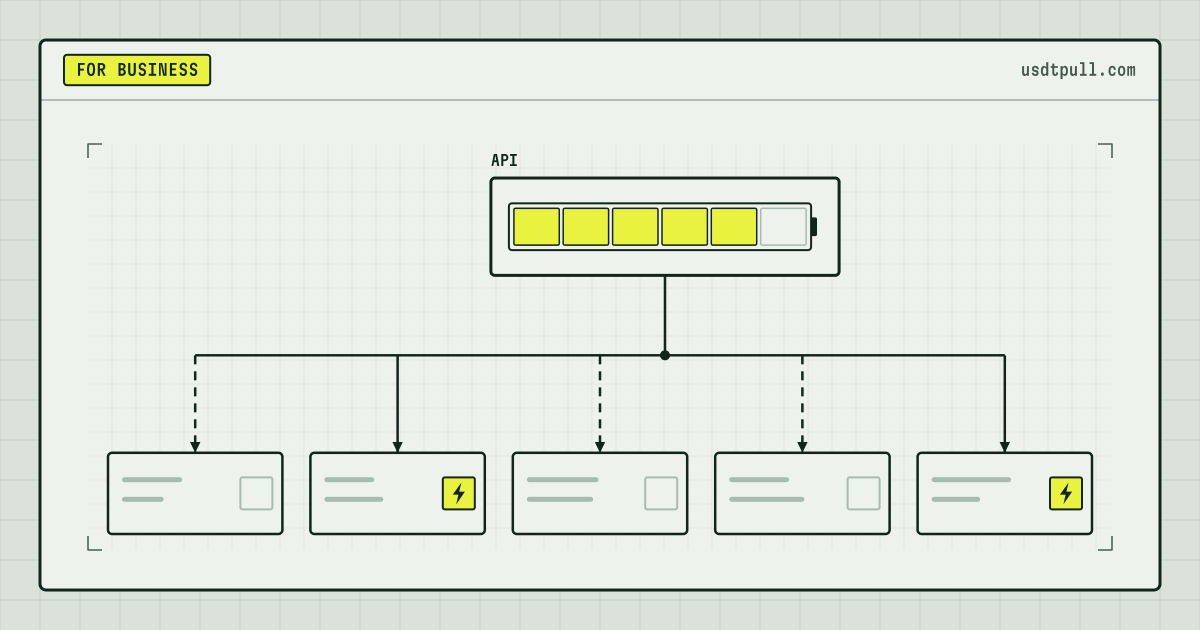
Yes. The USDT contract on TRON lets its owner, a 2-of-3 multi-signature contract run by Tether, put any address on a blacklist. From that moment the address cannot send USDT, although it can still receive it, and the owner can later wipe its whole balance with destroyBlackFunds. Between Oct 16 and Nov 14, 2026 the contract logged 315 new listings and 50 balance wipes worth 40,595,409.31 USDT.
Below: the code, one listing traced on chain, a free status check and what it changes for a business.
The functions behind a freeze
The word “freeze” does not appear in the contract. Tether’s terms use it; the code calls it a blacklist. Everything sits in the verified source of TR7NHqjeKQxGTCi8q8ZY4pL8otSzgjLj6t (code tab on TronScan):
| Function | Who can call it | What it changes | Event in the log |
|---|---|---|---|
getBlackListStatus(address), isBlackListed(address) |
anyone, read only | nothing, returns true or false | none |
addBlackList(address) |
owner only | sets the flag for the address | AddedBlackList(_user) |
removeBlackList(address) |
owner only | clears the flag | RemovedBlackList(_user) |
destroyBlackFunds(address) |
owner only, and only for a listed address | sets the balance to zero and cuts total supply by the same amount | DestroyedBlackFunds(_blackListedUser, _balance) |
pause() / unpause() |
owner only | stops or restarts transfers and approvals for every holder | Pause / Unpause |
The token basics are in what USDT TRC-20 is.
What the code actually checks
Two lines carry the whole blacklist. In transfer the contract runs require(!isBlackListed[msg.sender]), so it looks at whoever signs the transfer. In transferFrom it runs require(!isBlackListed[_from]), so it looks at the address whose tokens are moving, not at the caller.
What follows from those two lines:
- Sending is blocked. A listed address cannot move USDT directly, and nobody can pull its USDT with an earlier
approve, becausetransferFromchecks the source. - Receiving is not blocked. Neither function looks at the recipient. USDT sent to a listed address arrives and stays there.
- TRX and other tokens are untouched. The flag lives inside the USDT contract only. A listed address can still send TRX, stake it and receive energy.
- A wipe takes everything. The contract keeps one number per address, with no record of which tokens came from where.
destroyBlackFundszeroes that number, including any USDT that arrived after the listing.
One listing, read on chain
The latest AddedBlackList before we wrote this was on Nov 14, 2026 at 16:33:15 UTC, block 88,000,034 (transaction 950d4697…). It shows how the owner acts:
- The transaction was not sent to the USDT contract. It was a call to the owner contract TBPxhV…HgATto, function
confirmTransactionfor its internal request number 11,910. - The signer, TRLi4K…wziN, is one of the three addresses that
getOwners()returned on Nov 15, 2026, andrequired()returned 2. That confirmation was the second one, so the owner contract executed the request at once. - The execution made an internal call to the USDT contract, and the log holds three events in order:
Confirmation,AddedBlackListforTACcFe...2ZKyi, andExecution. - The signer paid for it like anyone else: 143,931 energy: 37 from its own resources, the rest paid by burning 14.3894 TRX.
The log records the address and nothing else: no reason, no case number, no message to the holder. We do not know why any address was listed.
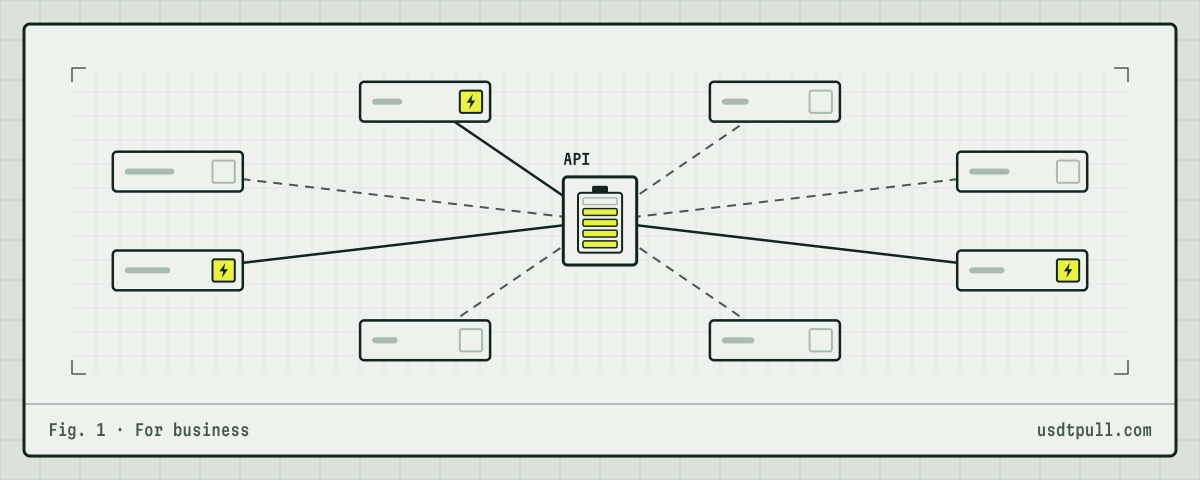
Thirty days of blacklist events
We pulled the three events from TronGrid for Oct 16 to Nov 14, 2026 (UTC), on Nov 15, 2026.
| Event | Count | Detail |
|---|---|---|
AddedBlackList |
315 | 314 different addresses; 15 on Nov 13 and 14 on Nov 14 alone |
RemovedBlackList |
28 | for example 3ee9b8c9… on Nov 13 |
DestroyedBlackFunds |
50 | 40,595,409.31 USDT in total |
| largest single wipe | 1 | 20,000,000 USDT on Nov 9, a2966de6… |
| largest burst | 17 | Nov 13, 18:52:30 to 18:53:09 UTC: 3,854,802.68 USDT wiped in 39 seconds |
Listings come in bursts, often in consecutive blocks. A wipe does not follow a listing at once: none of the 50 wiped addresses was among the 314 listed in the same window. Until a wipe or a removal, a listed address keeps its USDT and cannot move it.
Tether’s own wording
Tether’s Token Terms of Sale and Service, last updated Feb 26, 2026, say in section 2 that Tether may “freeze any Tether Tokens held by you” as required by law or where it “determines it is prudent to do so”. Section 8 adds that if Tether “determines or suspects” a prohibited use, the sanction may include “blacklisting any Digital Tokens Address which holds Tether Tokens” and a report to authorities “without providing any notice to you”. The terms also refer to a separate Law Enforcement Requests Policy on the same page; we could not read its text, so we do not describe it.
Check any address for free
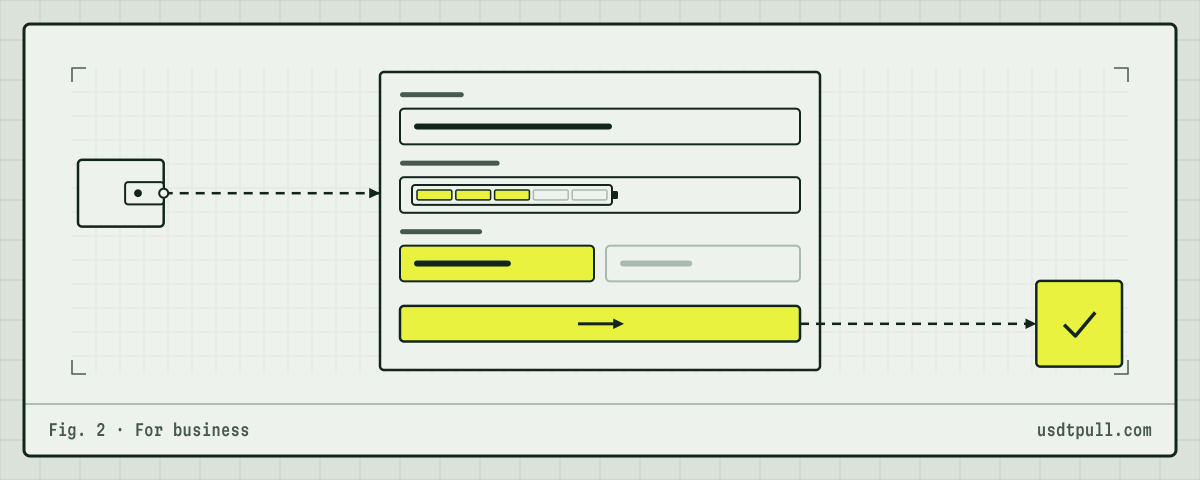
getBlackListStatus is a read call. Send it through wallet/triggerconstantcontract and nothing is signed or broadcast. The request format and the address encoding are explained in estimating energy with triggerconstantcontract; only the function and the parameter change:
curl -s https://api.trongrid.io/wallet/triggerconstantcontract \
  -H 'content-type: application/json' \
  -d '{"owner_address":"TU4vEruvZwLLkSfV9bNw12EJTPvNr7Pvaa",
       "contract_address":"TR7NHqjeKQxGTCi8q8ZY4pL8otSzgjLj6t",
       "function_selector":"getBlackListStatus(address)",
       "parameter":"0000000000000000000000000288d1220ac3c74313786c69bca212320344c3a2",
       "visible":true}'
What the public TronGrid node returned on Nov 15, 2026, between 09:24:01 and 09:24:33 UTC:
| Call | Result |
|---|---|
getBlackListStatus for TACcFe…2ZKyi |
...0001, true |
getBlackListStatus for TU4vEr…7Pvaa |
...0000, false |
balanceOf for TACcFe…2ZKyi |
147,145.588 USDT still on the address |
simulated transfer of 1 USDT from TACcFe…2ZKyi |
REVERT opcode executed, status FAILED after 4,466 energy |
simulated transfer of 1 USDT to TACcFe…2ZKyi |
success, 64,285 energy, the same as any standard transfer |
paused() |
false |
One trap when you read the last simulation: its return value is zero even though the transfer succeeds, because the function in this contract never sets one. Judge the result by the status field, not by the return value.
What it means for a business
Paying out to a listed address. The transfer goes through and costs a normal transfer’s energy. The customer then cannot move the money, and the dispute lands on your support. Check the payout address before you send, not after.
Receiving from a listed address. It cannot happen: the contract rejects the sender. If a customer cannot pay despite a balance, a listing is one possible reason.
Your own addresses. This is the expensive case. If one of your deposit or hot wallet addresses were listed, all USDT on it would stop, including deposits that keep arriving. Low balances on deposit addresses limit what can be stuck at once; regular sweeps are covered in sweeping USDT from deposit addresses.
Energy on a listed address. Delegating energy is a TRON system operation, not a USDT call, so it can reach a listed address without any error. The USDT transfer still fails at the blacklist check, as the simulation above did after 4,466 energy. Model calculation: energy rented for one standard transfer from a listed address costs 2.21 TRX at 34 SUN per unit for 1 hour as of Nov 22, 2026, and moves no USDT. The exact price is shown in the service before you pay; see pricing.
A short routine that follows from the code:
- Before the first payout to a new address, read its status.
- Read the status of your own operating addresses on a schedule, not only when a transfer fails.
- Before renting energy for an address that has never sent USDT through you, read its status too.
- Keep the result with a timestamp. A check describes one moment; an address that is clean today can be listed tomorrow.
UsdtPull offers a USDT freeze check that tracks the status of an address, along with AML checks of addresses and transactions; see business services. No check can promise that an address will stay clean. Related risks in payouts are covered in address poisoning, and what a rental provider can and cannot do in is renting TRON energy safe.
FAQ
Can a frozen address still receive USDT?
Yes. Neither transfer nor transferFrom checks the recipient, so incoming USDT arrives and cannot leave.
Is the TRX on a listed address frozen too? No. The blacklist is a flag inside the USDT contract. TRX, staking and energy on the address work as before.
Can extra TRX or energy unlock a listed address?
No. Only the owner can call removeBlackList. Anyone who offers to “unfreeze” USDT for a fee cannot change the contract.
Does the holder get a notice? No. The contract emits an event and nothing more. More answers are in the FAQ.