How to Revoke a USDT Approval on TRON and What It Costs
Revoke a USDT TRC-20 approval with approve(spender, 0): how to check allowances for free, what a revoke cost on Nov 20, 2026, and fake revoke sites to avoid.
- Category
- Guides
- Published
- Reading time
- 8 min
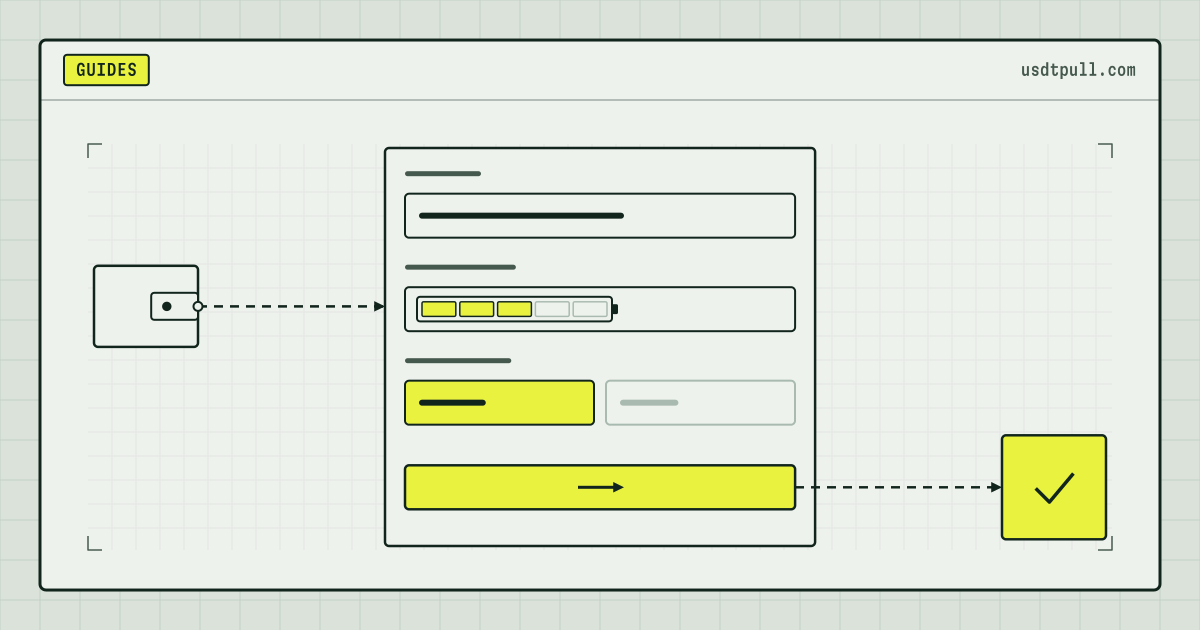
To revoke a USDT approval on TRON, send one transaction from your own address to the USDT contract: approve(spender, 0). It sets the allowance to zero, and from the next block the spender can no longer pull USDT from you with transferFrom. As of Nov 20, 2026 a revoke used 33,764 energy and about 345 bandwidth, so without energy the network burned 3.38 TRX for it; checking an allowance first costs nothing at all.
A revoke only stops future pulls: USDT a spender already moved stays where it went. Below: the contract code, three free ways to check, real revoke transactions, the burn and rent math, and fake “revoke services”.
approve, allowance and transferFrom in plain terms
The TRC-20 standard defines three functions that work together:
approve(spender, value)“authorizes _spender (often a DApp contract) to transfer up to _value tokens from the caller’s account”;allowance(owner, spender)returns how many tokens the spender may still take;transferFrom(from, to, value)lets the approved spender move tokens, and only works if the owner calledapprovefirst.
The USDT contract on TRON (TR7NHqjeKQxGTCi8q8ZY4pL8otSzgjLj6t, source verified on TronScan) adds details that matter for a revoke:
- approve overwrites. The key line is
allowed[msg.sender][_spender] = _value. There is no rule that the old value must be zero first, soapprove(spender, 0)works from any state. - Unlimited stays unlimited. If the allowance equals the maximum number, 2^256 - 1,
transferFromdoes not reduce it. A spender with an unlimited approval can come back again and again. - transferFrom emits no Approval event. The allowance goes down silently when a limited approval is used. This is why the last Approval event is not always the current allowance.
- decreaseApproval exists. With an amount above the current allowance it also sets zero, but
approve(spender, 0)is easier to read before signing.
Signing an approve moves no tokens, which is why it looks harmless. The general picture of what a stranger can and cannot do with your address is in is renting TRON energy safe; this guide covers the cleanup when an approve was already signed.
Check your allowances for free
Reading an allowance is a constant call: nothing is signed, nothing is sent, nothing is burned.
1. Ask the contract directly
Post this to TronGrid’s triggerconstantcontract (illustrative example; parameter is your address and the spender’s, each as 20 bytes of hex padded to 32):
POST https://api.trongrid.io/wallet/triggerconstantcontract
{
  "owner_address": "<your address>",
  "contract_address": "TR7NHqjeKQxGTCi8q8ZY4pL8otSzgjLj6t",
  "function_selector": "allowance(address,address)",
  "parameter": "<owner, 32 bytes><spender, 32 bytes>",
  "visible": true
}
The answer is in constant_result. We ran two such calls on Nov 20, 2026 at 05:27 UTC:
- for the owner and spender of approve fb978f32…, an unlimited approval to a contract TronScan names SunSwapProxy, the result was 64 hex
fcharacters: unlimited; - for the owner and spender of revoke 5b3718c1…, the result was zero.
USDT has 6 decimals, so a result of 200000000 means 200 USDT.
2. Read Approval events
TronGrid lists contract events by name (events by contract): https://api.trongrid.io/v1/contracts/TR7NHqjeKQxGTCi8q8ZY4pL8otSzgjLj6t/events?event_name=Approval. Each record has owner, spender and value. The latest 200 USDT approvals on Nov 20, 2026 (04:38 to 05:23 UTC) split like this: 140 for a set amount, 52 unlimited, 8 set to zero. Events show who you approved and when; the live amount comes from allowance, for the reason given above.
3. Find your own approve calls
Every approve you signed is an outgoing call to the USDT contract whose data starts with 095ea7b3, the selector of approve(address,uint256). Your transaction history from TronGrid (transactions by account) or on tronscan.org shows them. TronScan also keeps a list of token approvals per address with names of known spender contracts; its public API returned exactly one entry, the unlimited SunSwapProxy approval, for the first address above.
What a revoke costs: real transactions
Receipts read through the TronScan API on Nov 20, 2026:
| Transaction | What it did | Energy | Dynamic part | Bandwidth | TRX burned |
|---|---|---|---|---|---|
| 5b3718c1… | Revoke, no energy on the address | 33,764 | 26,076 | 346 | 3.3764 + 0.346 = 3.7224 |
| 3eb4f97c… | Revoke, energy already on the address | 33,764 | 26,076 | 345 | 0.345 (bandwidth only) |
| fb978f32… | Unlimited approve | 99,764 | 77,076 | 345 | 0 |
| 464b7c64… | Approve for 200 USDT | 99,764 | 77,076 | 345 | 0.345 (bandwidth only) |
The approve figure of 99,764 is unchanged since we first measured it on Oct 19 in energy by transaction type. A revoke costs about a third of that because of how storage is priced: writing a value into an empty allowance record is the expensive case, changing a record that already holds a value is cheaper. Most of each number is the USDT contract’s dynamic surcharge (energy factor 34,000 as of Nov 20, 2026).
We also simulated three approves without sending them. Each returned energy_used 33,764:
- revoking an existing unlimited approval;
- changing that unlimited approval to 1 unit;
- “revoking” an allowance that was already zero.
The last line is the practical one: a revoke of an empty allowance costs the same 33,764 and changes nothing. Check with allowance first, then sign. The method for such a simulation is in estimate energy with triggerconstantcontract.
Burn or rent: the math
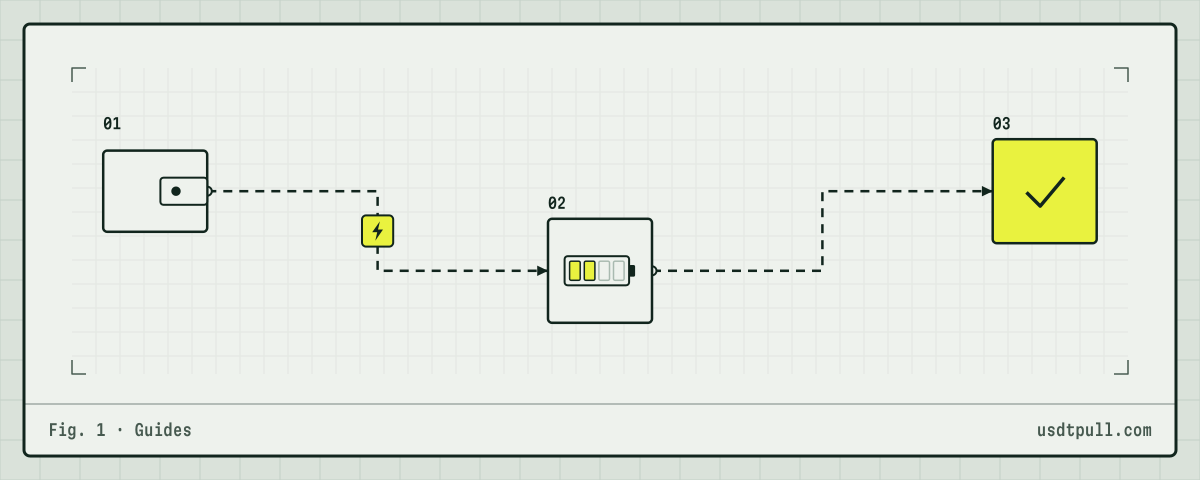
Burned TRX = energy × 100 SUN / 1,000,000, plus 0.345 TRX of bandwidth if the free 600 daily units are already used.
Rented cost = energy × rate / 1,000,000, at the current rate on Nov 22, 2026: 34 SUN per unit for 1 hour.
| Plan | Energy | Burned, TRX | Rented, TRX |
|---|---|---|---|
| One revoke | 33,764 | 3.38 | 1.15 |
| Three revokes | 101,292 | 10.13 | 3.44 |
| Revoke, then a standard USDT transfer | 33,764 + 64,285 = 98,049 | 9.8 | 3.33 |
One trap in the last row: energy rented for a single transfer (65,000) covers the revoke, but then only 31,236 is left, and the network burns TRX for the remaining 33,049 of the transfer. Plan the full volume of everything you will send inside the term. The rate changes; the exact price is shown in the service before you pay, and reference prices are on the pricing page.
Fake revoke services and seed phrase requests
Approval scams have a second act. After a loss, people search for a way to revoke and land on sites or “support” chats that offer to do it for them. Three signs of a fake:
- It asks for a seed phrase or private key. A revoke is a normal transaction you sign in your own wallet. Nobody needs your phrase to send it, and anyone who has it controls the whole address.
- The transaction is not approve to zero. A real revoke is a call to the token contract, method
approve, with the spender you want to cut off and the value 0. Anapprovewith a large value, anincreaseApproval, a transfer or an account permission update is the opposite of a revoke. - It wants a fee to “release” funds. A revoke cannot return anything, so a fee for recovery is a second theft.
Look-alike addresses are a separate trick that no revoke prevents: see address poisoning on TRON.
What to do, step by step
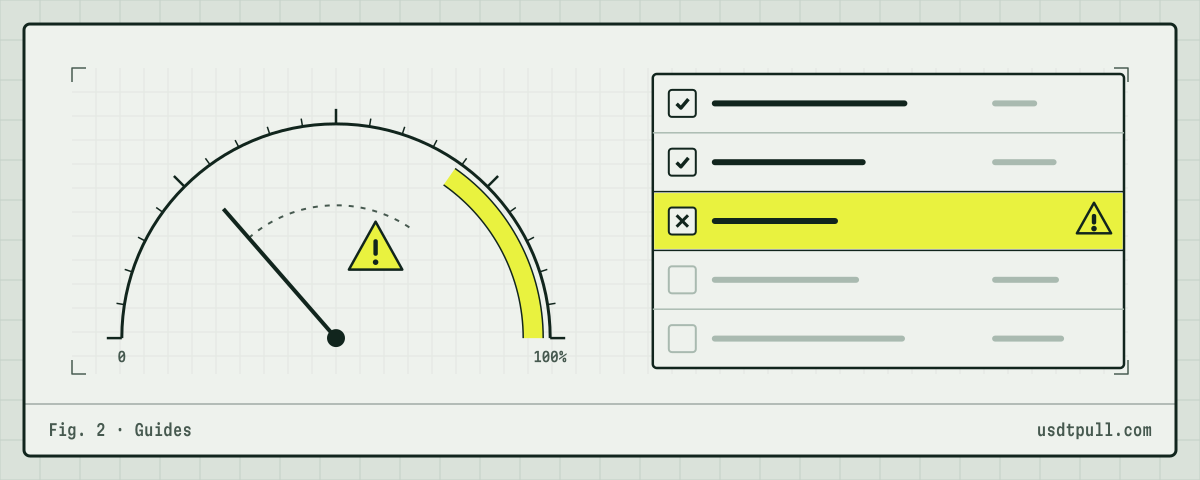
- List your approvals with one of the three free methods above.
- Read each allowance with
allowance(owner, spender). Skip the ones already at zero. - Decide which to keep. A spender you still use and trust can stay; unlimited approvals to contracts you no longer use go first.
- Check resources. Each revoke needs 33,764 energy and about 345 bandwidth. Without them the address burns about 3.38 TRX each, plus 0.345 TRX when free bandwidth is used up.
- Sign
approve(spender, 0)in your own wallet, from the address that gave the approval, and nowhere else. - Confirm: open the transaction on TronScan, then call
allowanceagain and expect zero.
If you suspect your key leaked, a revoke is not enough: move what remains to a new address. More answers are in the guides and FAQ.
FAQ
Does revoking cost money? It is a normal transaction: 33,764 energy and about 345 bandwidth as of Nov 20, 2026, about 3.38 TRX burned without energy.
Will a revoke return stolen USDT?
No. It sets the allowance to zero for the future. Tokens already moved by transferFrom stay with the recipient.
Do I need USDT on the address to revoke?
No. approve does not check the token balance. You need an activated address and energy or TRX to cover the call.
Is checking an allowance free?
Yes. allowance is a read through triggerconstantcontract: nothing is signed or sent, and nothing is burned.