How Much TRX Do You Need to Send USDT TRC-20?
To send USDT TRC-20 with no energy, keep about 6.8 TRX, or 13.4 TRX if the recipient has no USDT. Exact numbers from real transfers as of Oct 13, 2026.
- Category
- Calculations
- Published
- Reading time
- 8 min
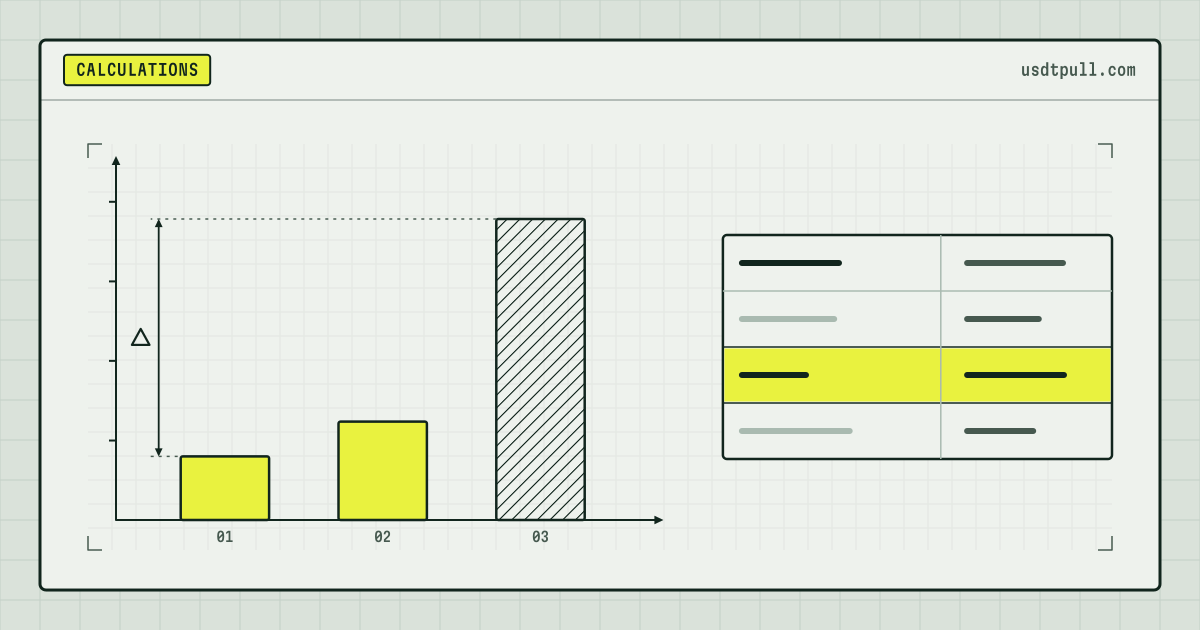
If your address has no energy, a standard USDT TRC-20 transfer needs about 6.8 TRX on the balance: 6.43 TRX burned for energy plus 0.345 TRX for bandwidth. If the recipient has never held USDT, plan for about 13.4 TRX. With enough energy on the address, the TRX you need drops to zero or a third of a TRX, and the amount of USDT you send does not change any of these numbers.
Below are the exact figures from real transactions as of Oct 13, 2026, the formula behind them and a table for the most common situations.
The short answer in numbers
These are the amounts the network actually charged on Oct 13, 2026, for transfers made with no energy on the sender’s address:
| Transfer | Energy used | Burned for energy | Burned for bandwidth | Total |
|---|---|---|---|---|
| Recipient already holds USDT | 64,285 | 6.4285 TRX | 0.345 TRX | 6.7735 TRX |
| Recipient has no USDT yet | 130,285 | 13.0285 TRX | 0.345 TRX | 13.3735 TRX |
Both rows come from real transactions you can open in the TronScan block explorer: a standard transfer and a transfer to a new address. On this site we round the energy up to 65,000 and 131,000, which gives the familiar 6.5 and 13.1 TRX. The round numbers leave a small margin, so they are safe for planning.
What we measured on Oct 13, 2026
To check the figures, we took 10 blocks produced between 06:49 and 06:52 UTC on Oct 13, 2026 and pulled every direct USDT transfer from them through the public TronGrid API. That gave 907 transfers:
- 688 used exactly 64,285 energy, which is a transfer to an address that already holds USDT;
- 219 used exactly 130,285 energy, a transfer to an address with no USDT;
- 835 of them used 345 bandwidth, the rest between 338 and 415;
- 807 of 907 senders burned no TRX for energy at all, because their address already had enough energy, staked or rented.
The amount was irrelevant. The smallest transfer in the sample was 0.4 USDT, the largest was 5,000,000 USDT. Both used the same 64,285 energy.
Why a transfer costs 64,285 energy
USDT is one of the busiest contracts on TRON, and the network applies a dynamic energy model to heavily used contracts. Each transaction receipt shows it in the energy_penalty_total field. A standard transfer has a base cost of 14,650 energy plus a 49,635 surcharge; a transfer to a new address has a base of 29,650 plus a 100,635 surcharge.
As of Oct 13, 2026, the USDT contract’s factor is 34,000, which equals the network maximum DynamicEnergyMaxFactor set by Proposal #95. In plain terms, the contract is charged at the top multiplier, about 4.4 times its base cost. According to the TRON documentation, the multiplier decays when usage drops. If it ever changes for USDT, the energy per transfer changes with it.
The formula
The TRX you need depends on what the address already has:
TRX needed = (energy required - energy on the address) × energy price + bandwidth fee
Where, as of Oct 13, 2026:
- energy price for burning: 100 SUN per unit (chain parameter
getEnergyFee, last changed by Proposal #104 in August 2025); - bandwidth fee: 345 × 1,000 SUN = 0.345 TRX, but only if free or staked bandwidth cannot cover all 345 units;
- 1 TRX = 1,000,000 SUN.
Two details make the difference between the two resources. Energy can be covered partly: if your address has some energy, the network burns TRX only for the missing part. Bandwidth cannot: according to the TRON documentation on paying for resources, each payment method must cover the full amount, so either the free allowance covers all 345 or the network burns TRX for all 345.
The free allowance is 600 bandwidth per day, recovering over a rolling 24 hours. One transfer fits; a second one within the same day usually does not, because 255 left is less than 345.
How much TRX in common situations
Calculated with the formula above. Energy is what the transfer actually uses, 64,285 or 130,285.
| Your situation | TRX the network takes | Keep on the balance |
|---|---|---|
| No energy, first transfer of the day | 6.43 TRX | about 6.8 TRX to be safe |
| No energy, second transfer today | 6.77 TRX | at least 6.8 TRX |
| 30,000 energy on the address | 3.43 TRX + bandwidth if needed | about 3.8 TRX |
| 65,000 rented energy, free bandwidth left | 0 TRX | 0, a small reserve helps |
| 65,000 rented energy, free bandwidth used up | 0.345 TRX | about 0.35 TRX |
| No energy, recipient has no USDT | 13.03 to 13.37 TRX | about 13.4 TRX |
| 65,000 energy, recipient has no USDT | 6.53 TRX for the missing 65,285 energy | about 7 TRX |
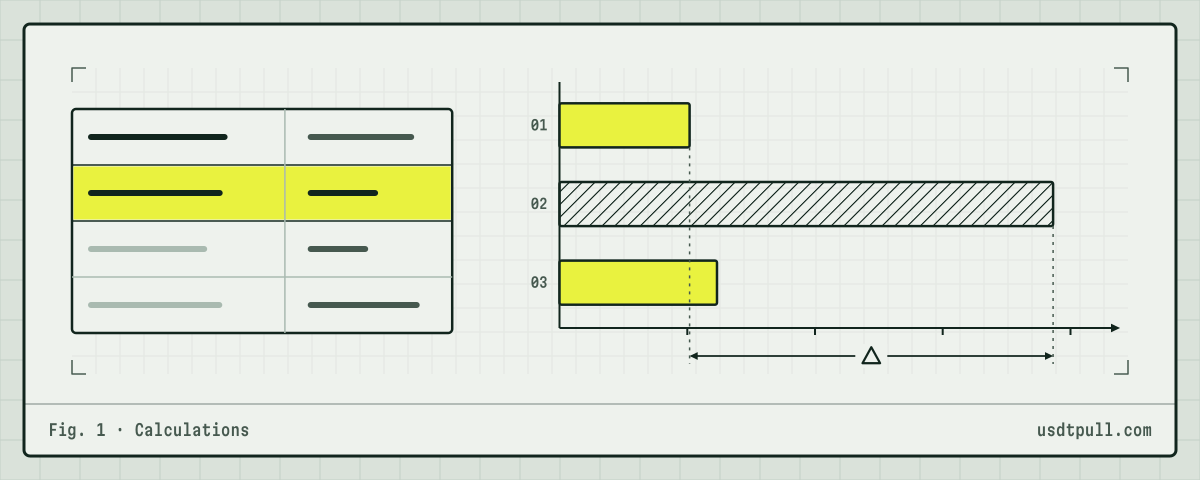
The last row is a common surprise. Energy rented for a standard transfer covers only half of a transfer to a new address, and the network burns TRX for the rest. Partial coverage is visible in real receipts. In our sample, an address had 333 energy, and the network burned 6,395,200 SUN, exactly (64,285 - 333) × 100. More on this in why a transfer to a new address costs more.
The same transfer with rented energy
Rental changes the question from “how much TRX to burn” to “how much energy to bring”. At an example rate of 32 SUN per unit of energy for 1 hour, 65,000 energy costs 65,000 × 32 = 2,080,000 SUN, or 2.08 TRX, and 131,000 energy costs about 4.19 TRX. This is an example rate: the exact price is shown in the app before you pay, and reference prices are on the pricing page. After that, the wallet only needs TRX for bandwidth, if free or staked bandwidth cannot cover all 345 units.
What happens if you do not have enough TRX
If the balance cannot cover the burn, the wallet either refuses to send or the transaction runs out of energy and fails. A failed transaction can still burn the TRX it consumed before it stopped, so the USDT stays put but the TRX is gone. We cover this case in the OUT OF ENERGY error guide.
What to do before you send
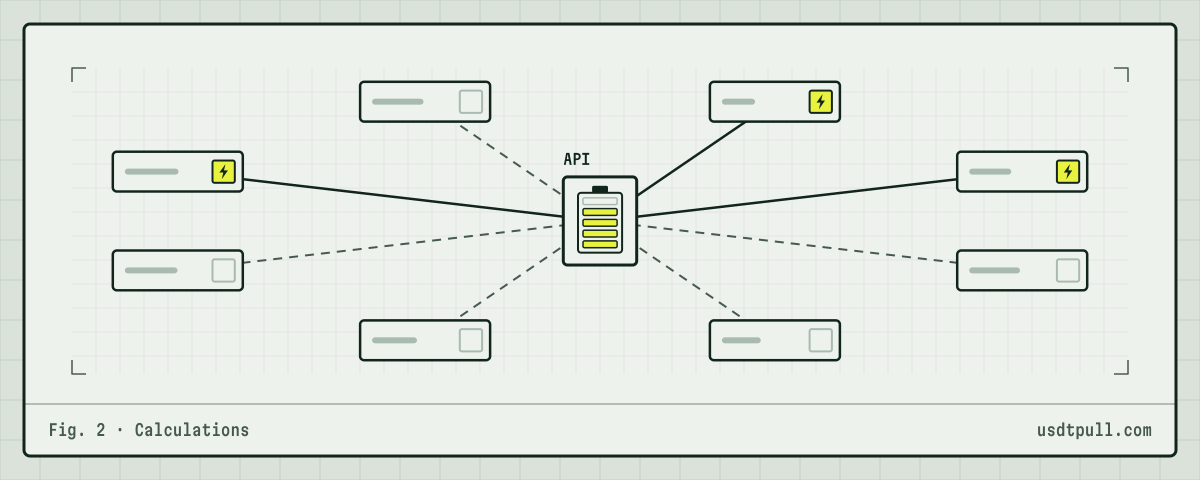
- Check the recipient. Open their address in TronScan. If the token list shows no USDT, count 130,285 energy, not 64,285.
- Check your energy. The resources block on your address page shows available energy and bandwidth. Subtract it from what the transfer needs.
- Choose how to cover the gap. Either keep enough TRX for the burn (6.8 or 13.4 TRX from the table) or bring energy to the address. The difference between energy and bandwidth explains which part rented energy covers.
- Keep about 0.35 TRX for bandwidth if you send more than once a day.
- Read the receipt after sending. The transaction page shows energy used and TRX burned. If you see an energy fee, the energy on the address was short.
Step-by-step ordering of energy is in the guides, and the full cost comparison of burning, staking and rental is in USDT TRC-20 transfer fee.
FAQ
Does sending more USDT need more TRX? No. In our sample, 0.4 USDT and 5,000,000 USDT used the same 64,285 energy.
Why does my wallet show a fee above 6.5 TRX? On top of 6.43 TRX for energy, it adds 0.345 TRX for bandwidth when your free daily allowance is used up. Wallets also show an estimate before sending; the final charge is on the transaction page in TronScan.
Can I send USDT with 0 TRX? Only if the address has enough energy and enough free or staked bandwidth for that transfer. Without either, the network has nothing to charge and the transfer will not go through.
Will these numbers change? They depend on chain parameters that validators can change by vote. As of Oct 13, 2026: 100 SUN per unit of energy and 1,000 SUN per unit of bandwidth. Current values are on the TronScan chain parameters page. Other common questions are in the FAQ.